
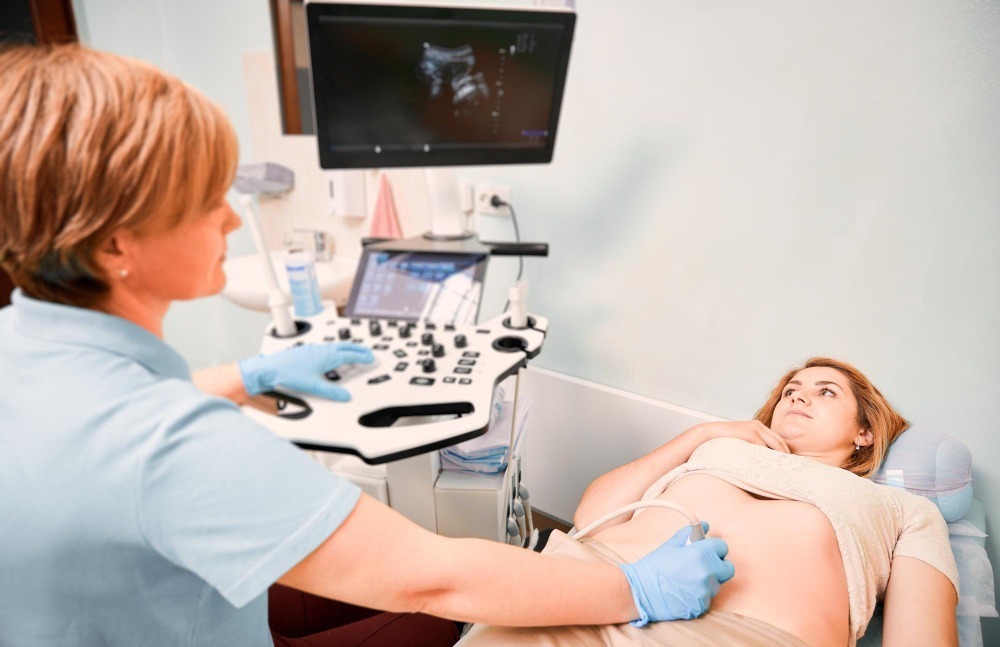
When a doctor recommends an ultrasound whole abdomen, patients often want to know what the examination covers, why preparation may be necessary, and what to expect during the appointment. Understanding these basics beforehand can make the experience more comfortable.
For patients living in Mahavir Enclave and nearby areas of New Delhi, the examination can usually be incorporated into a routine diagnostic visit when it has been clinically advised.
What Is a Whole-Abdomen Ultrasound?
Ultrasound is an imaging technique that uses high-frequency sound waves to produce images of structures within the body. Unlike imaging methods that use ionising radiation, standard diagnostic ultrasound creates images using sound waves.
A whole-abdomen ultrasound may allow relevant abdominal and pelvic structures to be assessed, depending on the clinical indication and the examination requested.
Doctors may recommend abdominal ultrasound when investigating certain symptoms, following up a known condition, or evaluating findings from other examinations.
Why Is Preparation Important?
The quality of an ultrasound examination can be affected by preparation. Depending on the requested scan, patients may receive instructions regarding fasting, fluid intake, or maintaining a full bladder.
These instructions are not identical for every ultrasound.
For that reason, patients should confirm preparation requirements with the diagnostic facility before arriving rather than relying on instructions received during an earlier, unrelated scan.
If fasting has been requested, confirm the required duration. If a full bladder is needed, ask when and how much water should be consumed.
What Happens During the Examination?
During a conventional abdominal ultrasound, the patient generally lies on an examination couch while ultrasound gel is applied to the area being assessed. A handheld transducer is moved across the skin to obtain the required images.
The sonologist or imaging professional may ask the patient to change position or briefly hold their breath so that particular structures can be viewed more clearly.
The examination itself is non-invasive. Its duration can vary according to the clinical indication, anatomy, and images required.
Make Previous Medical Information Available
If you have undergone previous abdominal imaging, carrying earlier reports may provide useful clinical context. The current examination should still be interpreted according to the present findings and reason for referral.
Aadya Diagnostics Centre serves patients seeking diagnostic investigations around Dwarka and nearby New Delhi localities, including Mahavir Enclave.
Most importantly, an ultrasound report should not be self-diagnosed using individual terms found online. Imaging findings gain clinical meaning when reviewed alongside symptoms, examination findings, laboratory results, and medical history by the treating doctor.
Understanding the process beforehand helps patients arrive properly prepared and ensures the diagnostic visit proceeds more smoothly.
Keywords